The Scandal (2026)
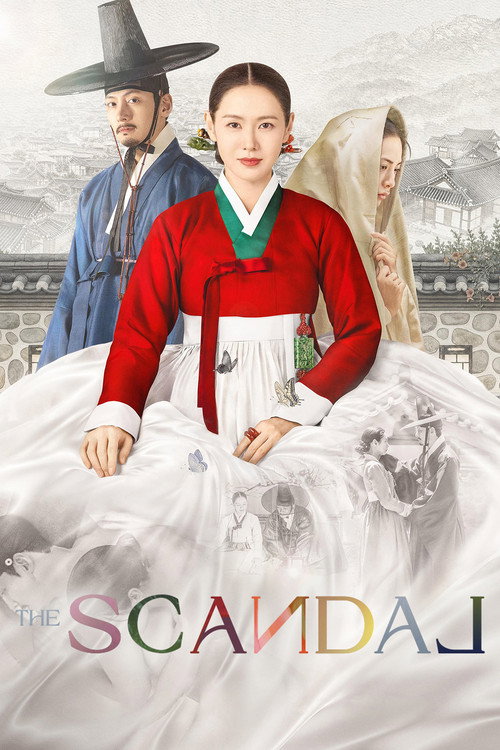
About The Scandal
In Joseon, a secret proposal ignites hidden desires in a gifted noblewoman, a famed lover and an unsuspecting lady caught in their dangerous game.
- Type: TV Series
- Platform: Netflix
- Release Date:
- IMDb Rating: 6.2/10
- Genres: Drama
- Language: Korean
- Duration: 55m per episode
Our Take on The Scandal — Joseon Intrigue, Passion, and Betrayal
Netflix's 'The Scandal' promised a steamy, dangerous dance of desires in Joseon, but did it deliver more than just a beautiful facade? Dive into our full review.
## The Setup
Netflix's 2026 foray into historical Korean drama, 'The Scandal,' transports viewers to the rigid, hierarchical world of Joseon, a period often romanticized but rarely depicted with such overt sensuality and psychological complexity. The series centers on three pivotal figures whose lives become irrevocably intertwined through a single, illicit proposal. At its heart is Lady Min Hyo-rin, a noblewoman of exceptional intellect and constrained ambition, whose societal role dictates a path far narrower than her sharp mind desires. Then there's Lord Lee Jin-woo, a man whose reputation as a notorious lover precedes him, his charm as dangerous as it is alluring. The unsuspecting third party is Lady Park Eun-bi, a woman of gentle disposition and sheltered existence, who becomes an unwitting pawn in a game far grander and more perilous than she can comprehend. The premise, as advertised, is a classic love triangle – or perhaps more accurately, a love polygon – steeped in the unforgiving social strictures of the Joseon era, where reputation is everything and a whisper can ruin a life. It promises hidden desires, dangerous games, and the tantalizing allure of forbidden passion, all set against a backdrop of exquisite hanbok and palatial intrigue. The series sets up a world where politeness masks manipulation, and a demure gaze can hide a burning ambition. The 'secret proposal' that ignites this drama isn't just about romance; it's a catalyst for societal transgression, personal awakening, and the unraveling of carefully constructed lives.
## What Works
'The Scandal' truly shines in its aesthetic and the nuanced performances of its lead actors. The cinematography is consistently breathtaking, capturing the serene beauty of Joseon architecture and landscapes with a painterly eye. Every shot feels meticulously composed, from the intricate patterns of hanbok to the soft glow of lanterns in a moonlit courtyard. This visual splendor isn't just for show; it enhances the atmosphere of clandestine meetings and heightened emotions. The series masterfully uses light and shadow to underscore the characters' internal conflicts and the secretive nature of their desires. For instance, the scene where Min Hyo-rin first encounters Lee Jin-woo in the hidden garden, bathed in the dappled sunlight filtering through the trees, perfectly encapsulates the delicate balance between public decorum and private yearning. The score, too, is exceptional, subtly weaving traditional Korean instruments with contemporary orchestral elements, elevating the emotional stakes without ever becoming overbearing. It’s particularly effective in moments of quiet tension, making a prolonged gaze or a hesitant touch feel incredibly significant.
Performance-wise, Lee Jin-woo's portrayal by Kim Ji-hoon is a standout. He brings a compelling depth to a character who could easily have been a one-dimensional rake. Kim imbues Jin-woo with a potent blend of arrogance, vulnerability, and a genuine, albeit misguided, capacity for affection. His scenes with both Min Hyo-rin and Park Eun-bi are charged with different kinds of chemistry – a fiery intellectual sparring with Hyo-rin, and a tender, almost protective warmth with Eun-bi. The complexity of his motivations, particularly his internal struggle between societal expectations and his own desires, is beautifully articulated through subtle expressions and body language. A notable moment is his conflicted expression after successfully manipulating Eun-bi into a compromising situation; it’s a fleeting glimpse of regret that humanizes an otherwise morally ambiguous character. Furthermore, the series excels in its exploration of female agency within a restrictive patriarchal society. Min Hyo-rin, played with steely intelligence by Han Ga-eun, isn't just a victim or a pawn. She's a strategist, a woman who understands the rules of her world and attempts to bend them to her will, even if it means sacrificing her own peace. Her internal monologues, though sometimes bordering on expository, offer a valuable window into the mind of a woman striving for autonomy in an era where it was rarely granted. The tension between her intellectual prowess and the domestic expectations placed upon her is a powerful undercurrent throughout the series, making her journey of self-discovery and rebellion genuinely compelling.
## What Doesn't
Despite its visual grandeur and strong performances, 'The Scandal' stumbles in several key areas, primarily its pacing and certain narrative choices. At 55 minutes per episode, the series often feels stretched, particularly in its middle arc. There are numerous scenes that linger too long on character reactions or repetitive dialogue, which, while initially contributing to the atmospheric tension, eventually begin to drag the narrative. The slow burn becomes less of a tantalizing build-up and more of a tedious wait. Several subplots, such as the political maneuvering within the court that occasionally surfaces, feel underdeveloped and ultimately inconsequential to the main romantic drama. They are introduced with hints of significance but never fully explored, leaving them feeling like narrative loose ends rather than enriching layers. For instance, a rivalry between two minor noble families is introduced early on, suggesting potential external threats or complications for the main characters, but it largely fizzles out without impact, making those early scenes feel like wasted screen time.
Another significant weakness lies in the character development of Park Eun-bi. While her innocence is central to the plot, her lack of agency and consistent naivety, even after experiencing significant betrayal, becomes frustrating. She often feels more like a plot device than a fully realized character, existing primarily to react to the actions of Hyo-rin and Jin-woo. Her emotional arc, while present, isn't as deeply explored or as satisfying as her counterparts. The series struggles to give her a voice beyond her suffering, making it difficult for the audience to fully invest in her plight. Her repeated failures to grasp the true nature of the schemes around her, even when presented with increasingly obvious clues, strains credulity and makes her seem less empathetic and more simply gullible. This ultimately diminishes the emotional impact of her eventual revelations. Furthermore, the resolution of certain conflicts, particularly the legal and social repercussions of the central scandal, feels somewhat rushed and, at times, implausible. Given the strict societal codes of Joseon, the consequences for the characters, especially those of high birth, often feel surprisingly lenient or conveniently sidestepped, undermining the very stakes the series meticulously built up. The ending, while attempting to be poignant, leaves several significant emotional questions unanswered, particularly regarding the long-term ramifications for Hyo-rin's future and Jin-woo's ultimate redemption or lack thereof. It feels like the series pulled some of its punches when it came to truly exploring the brutal consequences of their actions.
## Who Is This For?
'The Scandal' is tailor-made for viewers who revel in visually stunning historical dramas, particularly those set in the Joseon era, and who appreciate a generous helping of romantic intrigue and psychological complexity. If you're drawn to intricate costumes, breathtaking scenery, and a slow-burn narrative that prioritizes character introspection over rapid-fire plot twists, then this series will likely captivate you. Fans of shows like 'Mr. Sunshine' (for its visual grandeur and historical backdrop, though 'The Scandal' is far more intimate) or 'The Red Sleeve' (for its focus on court romance and the struggles of women in power) will find much to appreciate here. This is for the viewer who enjoys dissecting complicated moral dilemmas and isn't afraid of morally ambiguous characters. You should be prepared for a mood that oscillates between tender romance, simmering tension, and quiet despair. It's best watched when you have the time to truly immerse yourself in its world, perhaps on a cozy evening with a cup of tea, allowing its intricate details and emotional nuances to slowly unfold. Expect to feel a mix of fascination, frustration, and a touch of heartbreak as you witness the characters navigate a world where love and societal expectations are constantly at war. If you prefer fast-paced action or clear-cut heroes and villains, this might test your patience.
## Final Verdict
'The Scandal' is a visually opulent and often emotionally resonant Joseon drama that, despite its narrative stumbles and pacing issues, offers a compelling, if sometimes frustrating, exploration of forbidden desires and societal constraints. Watch it for the stunning cinematography, the nuanced performances, and the thorny ethical questions it poses, but brace yourself for a slow burn and some unresolved narrative threads.
— WatchThisFlix Editorial Team
More on WatchThisFlix
WatchThisFlix is a free streaming guide covering new releases on Netflix, Amazon Prime Video, Disney+, Max (HBO), Apple TV+, Hulu, Peacock, Paramount+, and more. We curate weekly picks across English, Hindi, Telugu, Tamil, Malayalam, Korean, Japanese, Spanish, French, and other languages.