Our Take on Turning Point: Generation 9/11 — Echoes That Still Reverberate
Netflix's 'Turning Point: Generation 9/11' attempts to chart the sprawling, generational impact of 9/11, but does it succeed in capturing the full scope of a quarter-century of global upheaval?
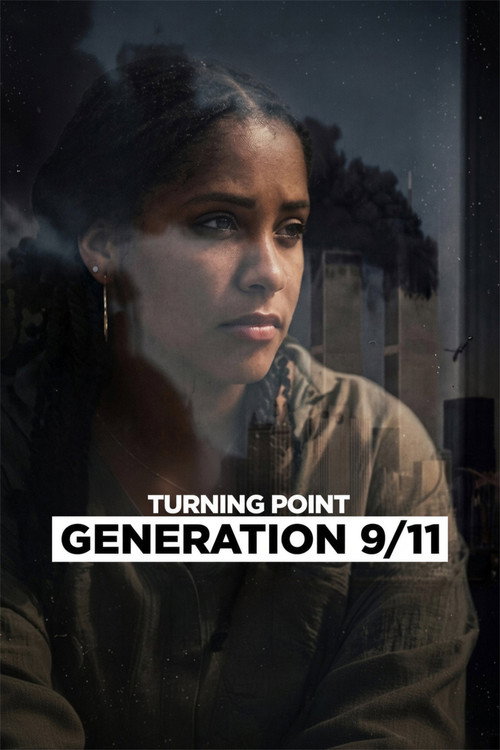
About Turning Point: Generation 9/11
- Platform: Netflix
- Release Date:
- IMDb Rating: 6.9/10
- Genres: Documentary
A quarter-century after September 11th, the attacks' ripple effects persist across generations. Orphaned children, War on Terror journalists, young Afghans, and U.S. Marines shaped by the 2021 withdrawal share their stories.
WatchThisFlix Review
By WatchThisFlix Editorial Team
## The Setup
"Turning Point: Generation 9/11" arrives on Netflix a quarter-century after the horrific events of September 11th, 2001, aiming to provide a sweeping, multi-generational look at how those attacks continue to shape lives across the globe. This isn't just another rehash of the day itself; instead, the documentary endeavors to trace the long shadow cast by 9/11, from the immediate aftermath to the withdrawal from Afghanistan in 2021, and beyond. We meet a diverse cast of individuals whose lives were irrevocably altered: children orphaned by the attacks, now adults grappling with that void; journalists who cut their teeth covering the War on Terror, witnessing its human cost firsthand; young Afghans who have known nothing but conflict, their futures perpetually uncertain; and U.S. Marines whose service culminated in the chaotic, heartbreaking final days in Kabul. The film's premise is ambitious, seeking to connect deeply personal narratives with the broader geopolitical tapestry woven by 9/11, illustrating how a single day's trauma rippled outward, shaping not just a nation, but a global generation.
## What Works
The documentary's greatest strength lies in its deeply personal, often raw, testimonials. The decision to focus on individuals who were children or very young adults at the time of 9/11, or whose lives were directly impacted by the subsequent conflicts, is a powerful one. We meet, for instance, a young woman who lost a parent in the Twin Towers. Her adult reflections on growing up with that absence, the questions she still carries, and her efforts to understand the legacy of her lost parent, are incredibly moving. It’s not just about grief, but about identity forged in tragedy. Her recounting of the simple, everyday moments she missed – a parent at a school play, a graduation – hits harder than any grand statement about loss. Similarly, the segment featuring the U.S. Marines who served in Afghanistan, particularly those involved in the 2021 withdrawal, is visceral. Their palpable sense of frustration, the moral injury of leaving behind a country they fought for, and their candid admissions of disillusionment are profoundly impactful. One Marine describes the feeling of the withdrawal as a "betrayal" – not just of the Afghan people, but of their own sacrifices. These are not talking heads reciting facts; they are people reliving trauma and grappling with its long-term consequences. The film skillfully interweaves archival footage with these contemporary interviews, creating a powerful sense of historical continuity. The journalistic perspective, too, adds a crucial layer, with reporters recounting the moral dilemmas of covering endless war, the desensitization that can occur, and the challenge of maintaining objectivity in the face of immense suffering. The contrast between the early, jingoistic media coverage and the later, more nuanced (but still often incomplete) narratives is subtly highlighted through their experiences.
Furthermore, the documentary excels in its visual storytelling, particularly in its use of juxtaposition. Scenes of serene American suburbia are often followed by the stark realities of war zones, underscoring the vast chasm between experiences, yet linking them inextricably through the chain of events. The pacing, for the most part, is deliberate, allowing each story to breathe and resonate. It avoids sensationalism, opting instead for a quiet, contemplative tone that gives weight to the gravity of its subject matter. The film doesn't shy away from the complexities and contradictions inherent in the post-9/11 world, presenting multiple viewpoints without explicitly endorsing one over another, which is a difficult but commendable feat in such a politically charged topic. The inclusion of young Afghans, whose perspectives are often marginalized in Western narratives, is particularly crucial. Their stories of growing up under the shadow of foreign intervention, their hopes for a future constantly deferred, and their fear for what comes next, provide a much-needed counter-narrative to the American-centric view.
## What Doesn't
Despite its many strengths, "Turning Point: Generation 9/11" struggles with the sheer breadth of its ambition. At 1 hour and 37 minutes, attempting to cover a quarter-century of global impact across multiple continents and diverse perspectives feels, at times, like trying to fit an ocean into a teacup. Some narratives, while compelling, feel truncated, leaving the viewer wanting more depth. The film introduces fascinating individuals – the orphaned children, the journalists, the Marines, the Afghans – but then moves on before we fully grasp the nuances of their journeys. It feels less like a deep dive into each individual's story and more like a series of poignant snapshots. This episodic structure, while ensuring a broad scope, prevents a truly immersive connection with any single character arc. For example, the segment on the young Afghans, while vital, feels too brief to truly convey the complexities of their situation and the diverse experiences within that community. It's almost as if the documentary is afraid to linger too long on any one perspective, perhaps in an attempt to maintain its perceived neutrality or to cover as much ground as possible. This results in some emotional resonance being sacrificed for comprehensive coverage.
Another minor quibble is the slightly uneven flow between the different 'generations' or groups. While the transitions are generally smooth, there are moments where the shift from a deeply personal story of loss in America to a geopolitical analysis of the War on Terror feels a little abrupt, disrupting the emotional momentum. The documentary also, perhaps understandably, focuses heavily on the American experience and the immediate aftermath in Afghanistan. While it touches on the ripple effects, a more explicit exploration of how 9/11 shaped other regions or led to the rise of new geopolitical challenges beyond the immediate scope of the War on Terror might have further solidified its 'generational' claim. While the film is excellent at showing the *impact*, it occasionally glosses over the deeper *analysis* of how specific policy decisions led to these outcomes, preferring to let the personal stories speak for themselves. This isn't necessarily a flaw, but it does mean that viewers looking for a more robust critical examination of political and military strategies might find it lacking in that particular dimension.
## Who Is This For?
This documentary is essential viewing for anyone who lived through 9/11 and its aftermath, offering a vital opportunity for reflection and understanding of its long-term consequences. It's particularly for those who appreciate character-driven documentaries that prioritize human experience over purely historical recounting. If you're drawn to stories of resilience, grief, and the complex interplay between personal lives and global events, you'll find much to ponder here. It's also highly recommended for younger generations who may not have direct memories of 9/11, as it provides a crucial humanizing context to a pivotal moment in modern history. Watch this if you're in the mood for a thought-provoking, emotionally resonant experience that will leave you with a deeper appreciation for the enduring echoes of history. It's best viewed in a quiet setting, ready to absorb the weight of these powerful narratives. Expect to feel a range of emotions: sadness, anger, empathy, and perhaps a renewed sense of the fragility of peace and the cost of conflict.
## Final Verdict
"Turning Point: Generation 9/11" is a necessary, albeit imperfect, addition to the growing canon of 9/11 documentaries. While its ambitious scope occasionally leads to a lack of depth in certain areas, its strength lies in giving voice to those whose lives were fundamentally altered by the attacks and their aftermath. The raw honesty of the individuals featured, from the orphaned children to the disillusioned Marines and the hopeful Afghans, makes this a profoundly moving and important film. It's not just a recounting of history; it's a testament to the enduring human spirit in the face of unimaginable tragedy and protracted conflict. This is a documentary that demands your attention, offering a poignant reminder that the 'turning point' of 9/11 continues to shape the world we inhabit today. Watch it tonight, but come prepared for a heavy, reflective experience that will stay with you long after the credits roll.
More Reviews & Recommendations
Discover what else is worth watching this weekend. WatchThisFlix covers the best new releases across Netflix, Amazon Prime Video, Disney+, Max (HBO), Apple TV+, Hulu, and more.