Our Take on My Grandfather Charles Manson — A Haunting Descent into Family's Darkest Corner
Sophia's quest to find her unknown grandfather unearths a terrifying truth: he's Charles Manson. This Hulu documentary explores the chilling legacy and the psychological toll of such a discovery.
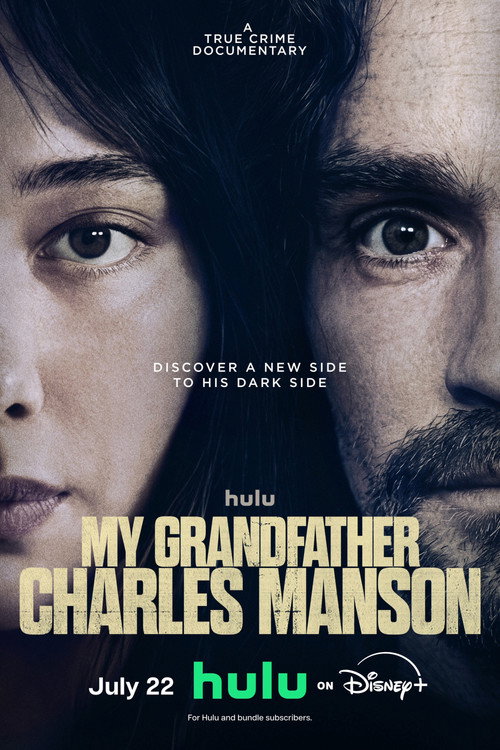
About My Grandfather Charles Manson
- Platform: Hulu
- Release Date:
- IMDb Rating: 7.4/10
- Genres: Documentary
Sophia was always the good girl growing up and her father's rock, but her quest to identify her unknown grandfather results in a shocking discovery: He is Charles Manson, history's most notorious criminal; and he bears striking physical similarities to her beloved father. Sophia's discovery propels her into an underworld of Manson family members and unreliable narrators as she traces her grandfather's life. Along the way, her genetics unlock never-before-released records and audio recordings that illuminate Manson's pathology in startling ways. But the more Sophia uncovers, the more her relationship with her father is strained. For Sophia, there's no turning back. What has she inherited, and how will she reckon with her family legacy?
WatchThisFlix Review
By WatchThisFlix Editorial Team
## The Setup
*My Grandfather Charles Manson* plunges us into a genealogical nightmare. Sophia, presented as the quintessential 'good girl' and her father's steadfast support, embarks on a seemingly innocuous journey to uncover her paternal grandfather's identity. What she unearths, however, is a revelation so monumental and terrifying it threatens to unravel her entire sense of self and her family dynamic. Her grandfather is none other than Charles Manson, the notorious cult leader and orchestrator of the Tate-LaBianca murders. The documentary immediately establishes the chilling physical resemblance between Manson and Sophia's beloved father, a visual detail that haunts every frame and becomes a central pillar of the film's psychological tension. Sophia's quest isn't just about names and dates; it's a deep dive into the 'Manson family' underworld, populated by aging adherents, former associates, and a labyrinth of unreliable narrators. The film promises a unique perspective, leveraging Sophia's direct genetic link to unlock previously unreleased records and audio recordings of Manson himself. This access is meant to shed new light on his pathology, but for Sophia, every step deeper into Manson's world strains her relationship with her father, forcing her to confront the unsettling question of inherited legacy and what, if anything, she might have inherited from such a monstrous figure.
## What Works
This documentary masterfully crafts a sense of creeping dread, not through jump scares, but through the slow, methodical reveal of a profoundly disturbing truth. The film's greatest strength lies in its protagonist, Sophia. Her journey is deeply personal and relatable, even as the subject matter is extraordinary. We witness her initial innocent curiosity morph into a horrified fascination, and then a determined, almost obsessive need to understand. The emotional arc is palpable; her internal conflict – the love for her father clashing with the monstrous identity of his biological parent – is the true heart of the film. A particularly powerful scene involves Sophia listening to an unearthed audio recording of Manson. The film doesn't just play the audio; it focuses on Sophia's face, her subtle reactions, the way her eyes widen or her brow furrows, allowing us to experience the horror and the bizarre charisma of Manson through her. This technique makes Manson's pathology feel immediate and chillingly personal, rather than a mere historical recounting. The inclusion of previously unreleased records, particularly those that delve into Manson's early life and psychological assessments, provides genuinely fresh insights. For instance, a segment detailing his childhood institutionalization and early patterns of manipulation is presented with a forensic precision that avoids sensationalism, instead aiming for a deeper understanding of the making of a monster. The interviews with former 'family' members are handled with a delicate balance; the film doesn't excuse their actions but rather seeks to understand the dynamics of their indoctrination, offering a nuanced, if unsettling, look at how minds can be twisted. The editing skillfully interweaves these historical elements with Sophia's contemporary investigation, creating a coherent narrative flow that never feels disjointed. The pacing is deliberate, allowing moments of reflection and absorption, which is crucial for such heavy subject matter. The visual motif of the physical resemblance between Sophia's father and Manson is used sparingly but effectively, often appearing in subtle framing or archival photographs, serving as a constant, unsettling reminder of the genetic link at the core of Sophia's dilemma. This isn't just a true-crime exposé; it's a profound meditation on identity, nature versus nurture, and the inescapable shadows of family history.
## What Doesn't
While *My Grandfather Charles Manson* is largely successful, it occasionally stumbles in its attempt to balance the intensely personal with the broader historical context. There are moments where Sophia's emotional journey, while compelling, feels slightly overshadowed by the sheer weight of Manson's history. The film introduces numerous 'unreliable narrators' from the Manson family orbit, which is an interesting narrative device, but some of these segments feel a little underdeveloped. A few interviews, while adding color, don't always advance Sophia's specific quest or shed significant new light on Manson's pathology beyond what's already known. It feels like the film sometimes struggles to decide if it's a character study of Sophia or a re-examination of Manson, leading to occasional narrative detours that, while interesting, don't always serve the central emotional arc as strongly as they could. Furthermore, the strain on Sophia's relationship with her father, while clearly present, isn't explored with the same depth as Sophia's internal struggle. The father remains somewhat of a secondary character, and while his reactions are understandable, a deeper dive into his own feelings about this revelation could have added another rich layer to the family dynamic. The film hints at the profound impact on him but doesn't always fully articulate it, leaving some emotional resonance untapped. Lastly, while the unreleased records are fascinating, a few segments could have been condensed. The meticulous detailing of every piece of evidence, while thorough, occasionally slows the pace in the middle act, making some stretches feel a bit academic when compared to the raw emotional power of Sophia's personal discoveries.
## Who Is This For?
This documentary is for viewers who are drawn to true crime that transcends mere sensationalism, seeking instead a profound psychological and emotional exploration. If you appreciate documentaries that delve into the 'why' rather than just the 'what,' and are prepared for a deep dive into the darkest corners of human nature and family legacy, this is for you. It will appeal to those fascinated by the Manson story but are looking for a fresh, intimate perspective, particularly one that examines the ripple effects of such evil across generations. Fans of character-driven documentaries, especially those that explore personal identity and the impact of lineage, will find Sophia's journey compelling. Watch this if you enjoy thoughtful, analytical storytelling over rapid-fire revelations. It's a film best consumed in a quiet, reflective setting, prepared for a sense of unease and a lingering contemplation of nature versus nurture. Expect to be challenged emotionally and intellectually, rather than simply entertained. Skip this if you prefer lighthearted fare or are looking for a straightforward, action-packed true-crime thriller; this is a slow burn that demands your full attention and emotional investment.
## Final Verdict
*My Grandfather Charles Manson* is a haunting, often uncomfortable, but ultimately vital documentary that transcends the typical true-crime narrative. It's an unflinching look at the insidious nature of inherited legacy, anchored by Sophia's courageous and deeply personal quest for truth. While it occasionally wavers in its narrative focus, its strengths — particularly the intimate portrayal of Sophia's emotional ordeal and the fresh archival material — make it an essential watch for anyone willing to confront the chilling implications of a family secret so monstrous. Watch this tonight; it will stay with you long after the credits roll.
More Reviews & Recommendations
Discover what else is worth watching this weekend. WatchThisFlix covers the best new releases across Netflix, Amazon Prime Video, Disney+, Max (HBO), Apple TV+, Hulu, and more.