Our Take on Don’t Say Good Luck — A Quirky Ride Through Superstition
Netflix's "Don't Say Good Luck" is a surprisingly heartfelt dramedy that delves into the absurdities of superstition and the bonds of family.
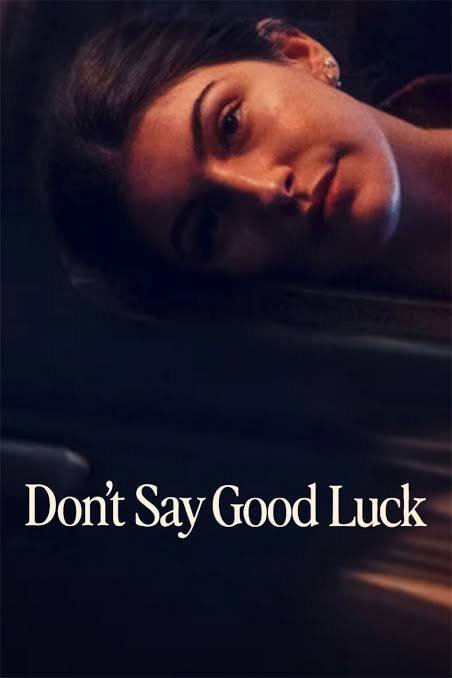
About Don’t Say Good Luck
- Platform: Netflix
- Release Date:
- Genres: Comedy, Drama
Don’t Say Good Luck — streaming on netflix.
WatchThisFlix Review
By WatchThisFlix Editorial Team
## The Setup
"Don't Say Good Luck," Netflix's latest original dramedy, drops us into the delightfully chaotic life of the Miller family, a clan so steeped in superstition they make a black cat crossing your path seem like a minor inconvenience. At the center of this maelstrom is Eleanor Miller (played with a captivating blend of neurosis and charm by the ever-reliable Clara Jenkins), a woman who genuinely believes that uttering the phrase "good luck" before any significant event will inevitably trigger a catastrophic chain reaction. Her conviction isn't born of idle fancy; it's a deeply ingrained belief system, passed down through generations, and seemingly validated by a series of comically disastrous events that punctuate her life. The film opens on the eve of her daughter, Lily's (newcomer Maya Singh, a revelation), make-or-break audition for a prestigious performing arts academy. Lily, a pragmatic and slightly exasperated Gen Z-er, views her mother's superstitions as an embarrassing anachronism, a source of constant friction in their otherwise loving relationship. The stakes are high: Lily's future hangs in the balance, and Eleanor's deep-seated anxieties threaten to derail everything. The film navigates the delicate balance between the absurd humor of Eleanor's rituals — from knocking on wood exactly seven times to avoiding ladders at all costs — and the very real emotional undercurrents of a mother's desperate desire to protect her child, even if her methods are, well, unconventional. It's a world where a spilled salt shaker isn't just a mess; it's a harbinger of doom, and a four-leaf clover isn't just a pretty plant; it's a shield against the unknown. Director Julian Vance masterfully crafts a narrative that feels both fantastical in its premise and deeply grounded in the relatable dynamics of family, fear, and the often-irrational ways we try to control an uncontrollable world.
## What Works
Clara Jenkins's performance as Eleanor is the beating heart of "Don't Say Good Luck." She doesn't just play a superstitious woman; she embodies the profound, almost spiritual weight of her beliefs. There's a scene where Eleanor, convinced that a broken mirror has cursed Lily's audition, attempts to *buy* a new mirror from a thrift store, only to discover it's already cracked. Jenkins's facial expressions — a rapid-fire succession of horror, resignation, and frantic determination — are a masterclass in comedic timing and emotional depth. She makes you laugh at Eleanor's antics while simultaneously empathizing with her underlying vulnerability. Maya Singh, as Lily, holds her own beautifully against Jenkins. Her portrayal of a teenager caught between loving her eccentric mother and desperately wanting to break free from the shackles of superstition is nuanced and authentic. Their arguments never feel forced; they're the natural friction of two strong personalities with vastly different worldviews. A standout moment is when Lily, exasperated by her mother's pre-audition rituals, finally explodes, not with anger, but with a quiet, heartbreaking plea for normalcy. It's a powerful scene that grounds the film's comedic elements in genuine emotional conflict.
The script by new writing duo Alex and Jamie Chen is remarkably sharp, delivering genuinely witty dialogue that never feels forced. The humor often stems from the juxtaposition of Eleanor's outlandish behavior with the mundane reality of everyday life. For instance, Eleanor's elaborate "anti-jinx" routine before a simple doctor's appointment, involving a specific sequence of knocking, spitting, and avoiding cracks in the pavement, is both hilarious and subtly poignant, highlighting the extent of her anxiety. Beyond the laughs, the Chens skillfully weave in themes of generational trauma, the nature of belief, and the often-unspoken ways families communicate love. The pacing is also commendable. Director Julian Vance keeps the story moving briskly, balancing the comedic set pieces with moments of quiet reflection. The cinematography, particularly in scenes set in Eleanor's cluttered, charm-filled home, adds to the film's quirky charm, using warm, inviting tones that make even the most chaotic moments feel cozy. The visual language subtly reinforces the idea that for Eleanor, her superstitions are not just a burden, but a deeply ingrained part of her identity and comfort.
## What Doesn't
While "Don't Say Good Luck" largely succeeds, it's not without a few minor stumbles. The film occasionally leans a bit too heavily into the slapstick elements of Eleanor's superstitions, particularly in the middle act. A sequence involving Eleanor trying to avoid walking under a ladder — a scene that felt somewhat protracted — could have been trimmed without losing its comedic impact. While these moments are funny, they sometimes distract from the more nuanced emotional core of the film. Additionally, the resolution, while satisfying, feels a tad rushed. After building up the profound impact of Eleanor's beliefs, the shift towards a more balanced understanding between mother and daughter, while earned, happens a little too quickly in the final scenes. A slightly more gradual or complex emotional arc for Eleanor, perhaps showing her grappling with the *idea* of letting go of some superstitions rather than just the *act* of it, could have added another layer of depth. The supporting characters, while charming, occasionally feel underdeveloped. Eleanor's brother, for example, serves primarily as a foil for her superstitions, and while his reactions are amusing, we don't get much insight into his own emotional landscape or why he tolerates (or enables) Eleanor's extreme beliefs. A deeper exploration of the family history of superstition beyond just Eleanor would have enriched the narrative even further.
## Who Is This For?
This film is absolutely for anyone who loves a dramedy that balances genuine laughs with a surprising amount of heart. If you enjoy character-driven stories about quirky families and the often-absurd ways we cope with life's uncertainties, then "Don't Say Good Luck" is right up your alley. Fans of films like "Little Miss Sunshine" or "The Farewell" will appreciate its blend of humor and emotional resonance. It's perfect for a cozy night in, perhaps with a cup of tea (spilled salt optional). You should watch this if you're looking for something that will make you laugh out loud, perhaps shed a tear or two, and ultimately leave you feeling warm and reflective about the eccentricities of the people you love. Expect to feel a mix of exasperation, amusement, and deep empathy. It's a film that celebrates the quirks that make us unique, even when those quirks drive us a little crazy.
## Final Verdict
"Don't Say Good Luck" is a charming, genuinely funny, and surprisingly poignant film that manages to find the universal in the utterly peculiar. Clara Jenkins delivers a standout performance that anchors the entire narrative, making Eleanor Miller one of the most memorable characters of the year. While it occasionally stumbles with pacing and some minor character development, its heart is firmly in the right place, and its wit is consistently sharp. It's a refreshing take on family dynamics and the power of belief, wrapped up in a delightful package. Definitely add this to your Netflix queue; it's a heartfelt gem worth your time. Skip it if you're allergic to quirky humor or deeply uncomfortable with discussions of generational neuroses, but for everyone else, this is a winning ticket.
More Reviews & Recommendations
Discover what else is worth watching this weekend. WatchThisFlix covers the best new releases across Netflix, Amazon Prime Video, Disney+, Max (HBO), Apple TV+, Hulu, and more.