Why You Must Watch 'Society of the Snow' on Netflix Right Now
Forget everything you think you know about survival films. Society of the Snow isn't just a story of endurance; it's a profound meditation on the human spirit, connection, and the very definition of life.
— By WatchThisFlix Editorial Team
The Hook: Why This One Is Different
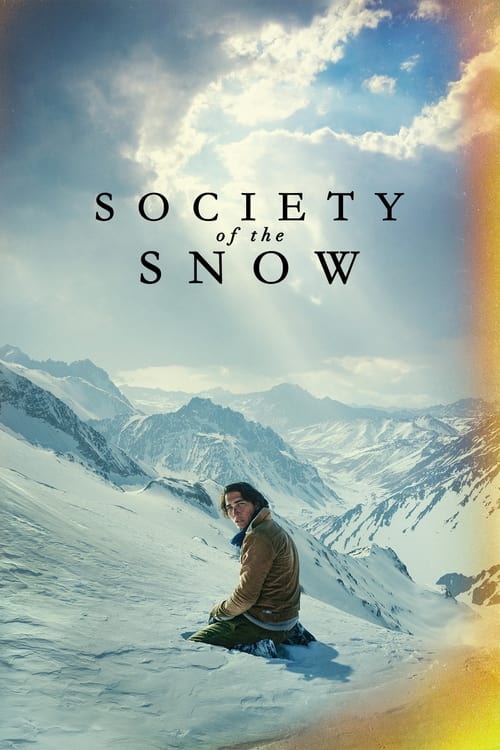
There’s a moment in J.A. Bayona’s “Society of the Snow” that’s seared into my memory, not for its brutality, but for its quiet, devastating beauty. It’s early in their ordeal, after the initial, horrific impact, when the survivors of Uruguayan Air Force Flight 571 are huddled in the mangled fuselage. One young man, Numa Turcatti, looks out at the endless, pristine white, the towering, indifferent peaks, and a single tear traces a path down his dirt-streaked face. It’s not a tear of despair, not exactly. It’s a tear of overwhelming awe, of a dawning, terrifying comprehension of their insignificance and the sublime, deadly majesty of their tomb. This isn't just a story about surviving a plane crash; it’s about confronting the absolute void, finding a flicker of humanity within it, and redefining what it means to be alive. That’s why “Society of the Snow” isn't merely a film; it’s an experience that will burrow under your skin and stay with you long after the credits roll.
What It's Actually About (No Spoilers)
The basic premise of “Society of the Snow,” available now on Netflix, is well-trodden ground: a plane carrying a Uruguayan rugby team crashes into the Andes in 1972, leaving the survivors stranded in an uninhabitable frozen wilderness. We’ve seen versions of this story before, most notably “Alive” from 1993. So, what makes Bayona’s rendition so compellingly different? It’s not just a retelling; it’s a re-examination, a profound dive into the spiritual and psychological crucible forged by unimaginable suffering. This film isn't just focused on the physical struggle against the elements or the desperate search for food. Instead, it meticulously charts the evolution of a micro-society, a fragile ecosystem of human beings forced to shed every societal convention and construct a new moral framework from scratch. It’s about the silent pacts, the unspoken understandings, the selfless acts of sacrifice, and the profound, almost mystical bond that forms between individuals facing the absolute end. The film asks: what truly defines us when everything else is stripped away? What kind of “society” do we build when the rules of the old world no longer apply? It’s less a disaster movie and more an anthropological study of the human spirit pushed to its furthest limits, narrated with a haunting intimacy that feels almost devotional.
The Performances
While “Society of the Snow” is very much an ensemble piece, focusing on the collective rather than a single hero, the performances are uniformly exceptional, embodying a raw, unvarnished truth. Enzo Vogrincic as Numa Turcatti, the film's narrator and, in many ways, its moral compass, delivers a performance of quiet strength and profound interiority. He’s not the most outwardly boisterous of the group, but his eyes convey volumes – a deep-seated empathy, a simmering doubt, and ultimately, a resolute will. His voiceover, delivered with a gentle, almost melancholic cadence, grounds the entire narrative, giving us access to the philosophical underpinnings of their struggle. Matías Recalt, portraying Roberto Canessa, captures the fierce, almost aggressive determination of a young medical student forced to become an impromptu doctor, making impossible decisions under unimaginable duress. Agustín Pardella’s Nando Parrado embodies the physical and emotional resilience that drives some of the most harrowing expeditions for rescue. What’s truly remarkable is that no single performance overshadows the others; instead, each actor contributes to a tapestry of shared suffering and collective will. They don’t just act; they inhabit these roles with a visceral authenticity that makes every shiver, every grimace, every shared glance feel intensely real. There are moments of quiet agony, of desperate prayer, of shared laughter in the face of death, that feel utterly unforced, a testament to the cast’s dedication and Bayona’s direction.
The Direction and Craft
J.A. Bayona, known for his masterful handling of disaster and human drama in “The Impossible,” elevates “Society of the Snow” far beyond mere spectacle. The cinematography, handled by Pedro Luque, is breathtakingly immersive. The Andes are not just a backdrop; they are a character – magnificent, terrifying, and utterly indifferent. Luque’s camera captures both the vast, isolating scale of the mountains and the claustrophobic intimacy of the fuselage, often juxtaposing sweeping aerial shots with tight, suffocating close-ups. The film is shot with a stark, naturalistic palette, emphasizing the harsh realities of their environment without ever feeling exploitative. The sound design is equally crucial, immersing us in the biting wind, the creak of the snow, the desperate rasp of breath. Michael Giacchino’s score is sparse but incredibly effective, never overpowering the emotional beats but rather underscoring them with a haunting, elegiac quality that feels both mournful and hopeful. Perhaps most impressively, the editing maintains a relentless, yet never rushed, pace. It allows moments of quiet contemplation to breathe amidst the escalating tension, giving weight to every decision and every loss. Bayona’s decision to film in the actual locations, and to use prosthetics and makeup that genuinely portray the ravages of starvation and frostbite, lends an almost documentary-like authenticity that is both difficult to watch and impossible to look away from.
The Themes Worth Talking About
“Society of the Snow” is rich with themes that resonate long after viewing. At its core, it’s a profound exploration of human resilience, not just in the physical sense, but in the spiritual and psychological realms. The film delves deeply into the nature of faith, not necessarily religious dogma, but the intrinsic human need to believe in something – a rescue, a purpose, or simply the goodness within one another. It’s a powerful testament to the strength found in community and collective endeavor, demonstrating how individual survival often hinges on the willingness to sacrifice for the group. The film also tackles the ethical and moral dilemmas inherent in extreme survival situations, particularly the taboo subject of anthropophagy. Bayona handles this with immense sensitivity and respect, framing it not as an act of savagery, but as a sacred, desperate act of love and communion, a way for the departed to give life to the living. It forces us to confront uncomfortable questions about what defines humanity, what boundaries we might cross when faced with the absolute, and how easily our preconceived notions of morality can shatter and reform under pressure. Ultimately, it’s a story about redefining what it means to live, to die, and to find meaning in the most desolate of circumstances.
Who Will Love It (and Who Might Not)
This film is an absolute must-watch for anyone who appreciates deeply human stories of survival, psychological dramas, and historical events portrayed with uncompromising realism and immense empathy. If you were moved by films like “The Impossible,” “127 Hours,” or even documentaries about extreme endurance, “Society of the Snow” will resonate powerfully. It’s perfect for viewers who value cinematic craft, thoughtful storytelling, and profound character studies over simple action or escapism. It will appeal to those who enjoy contemplating big philosophical questions about life, death, and human nature. However, it’s important to acknowledge that this is not an easy watch. Those who are squeamish about depictions of extreme suffering, physical deterioration, or the stark realities of survival might find it challenging. It’s also not a film for those seeking light entertainment or a quick thrill. Its deliberate pacing and unblinking honesty demand emotional investment and patience. If you prefer to avoid stories with a strong sense of existential dread or are sensitive to depictions of human fragility, you might struggle with some of its more intense moments. But for those willing to lean in, the rewards are immense.
Addressing the Doubters
Some might dismiss “Society of the Snow” as “just another survival movie” or question the need for a new adaptation of a story already told. Others might shy away from the inherent grimness, fearing it will be too depressing or gratuitous. Let me assure you: these concerns, while understandable, don't apply here. This isn’t a gratuitous film; it handles its most difficult moments with a profound respect and solemnity that elevates it beyond mere shock value. It focuses on the emotional and spiritual journey rather than lingering on sensationalism. And while the story has been told before, Bayona’s version brings a new, crucial perspective – one that feels deeply authentic due to its close collaboration with the actual survivors and the families of the deceased, and its commitment to telling the story from the perspective of the entire group, especially those who didn’t make it. The film's use of real locations and a cast of largely unknown Uruguayan and Argentine actors speaking in their native Spanish further cements its authenticity. It doesn't just show you what happened; it makes you feel what it was like to be there, to grapple with those impossible choices, to find beauty and purpose amidst the horror. It’s a testament to the human spirit that is ultimately hopeful, not hopeless, and that makes it worth pushing past any initial reservations.
Watch It Tonight
In a streaming landscape often cluttered with algorithmic fluff, “Society of the Snow” stands out as a towering achievement – a film of immense power, beauty, and emotional depth. It’s not just a story; it’s a vital piece of cinematic art that speaks to the core of what it means to be human. It reminds us of our fragility, our capacity for cruelty, and, most profoundly, our boundless potential for love, sacrifice, and connection when faced with the unimaginable. This isn't just a movie to watch; it’s a movie to experience, to absorb, and to let marinate in your thoughts long after the final frame. It’s a film that will challenge you, move you, and ultimately, leave you with a renewed appreciation for the preciousness of life and the indomitable spirit of humanity. Don’t scroll past it. Clear your schedule, find a quiet space, and prepare to be profoundly moved. “Society of the Snow” isn't just a recommendation; it’s an imperative. Watch it tonight on Netflix, and allow yourself to be swept away by one of the most powerful and meaningful films of the year.
More from WatchThisFlix
WatchThisFlix is your free guide to the best streaming content this weekend. We curate weekly picks across Netflix, Prime Video, Disney+, Max (HBO), Apple TV+, Hulu, and more — in English, Hindi, Telugu, Tamil, Korean, and other languages.